
Plushtones | Product Design, Music
Executive Summary
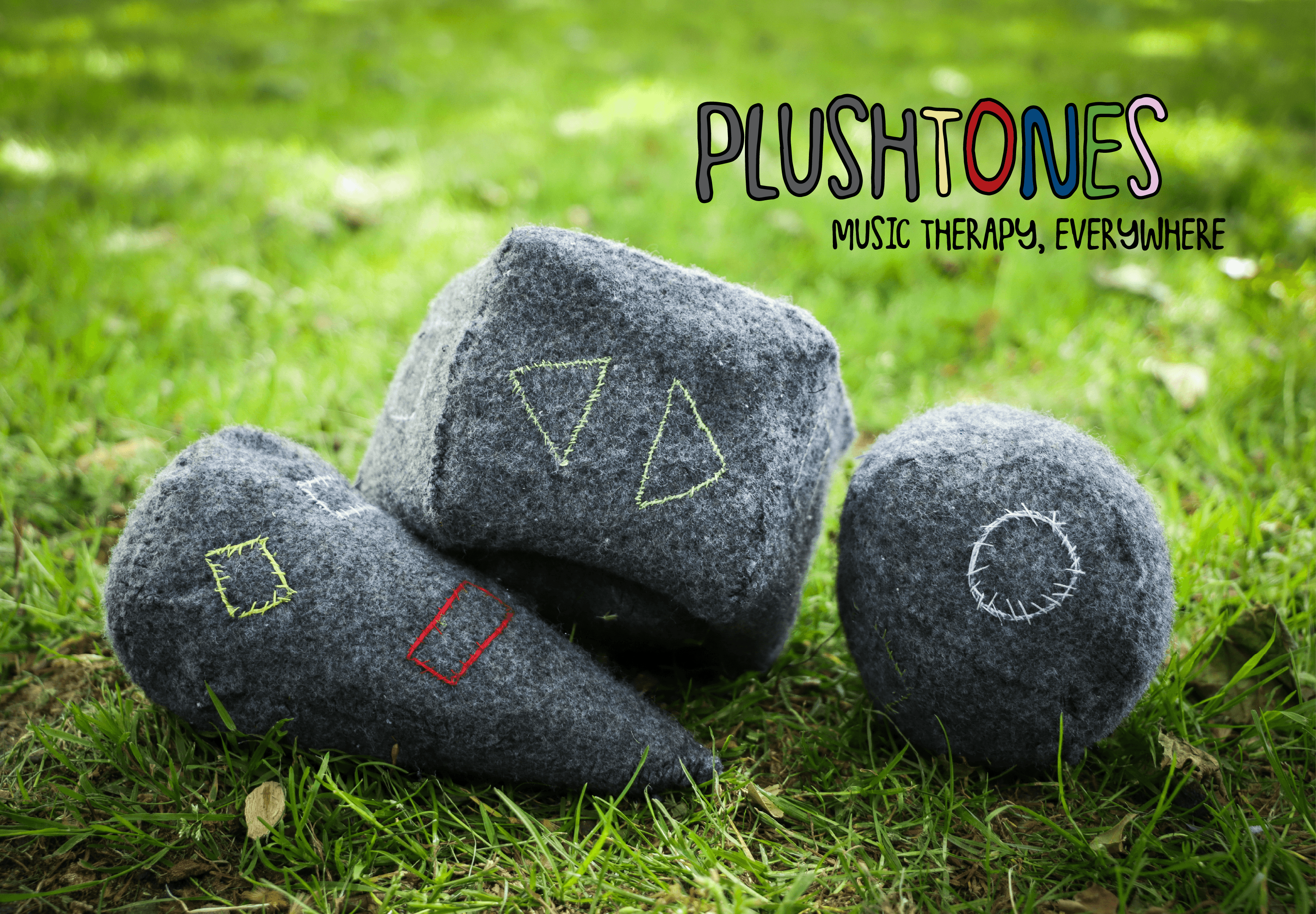
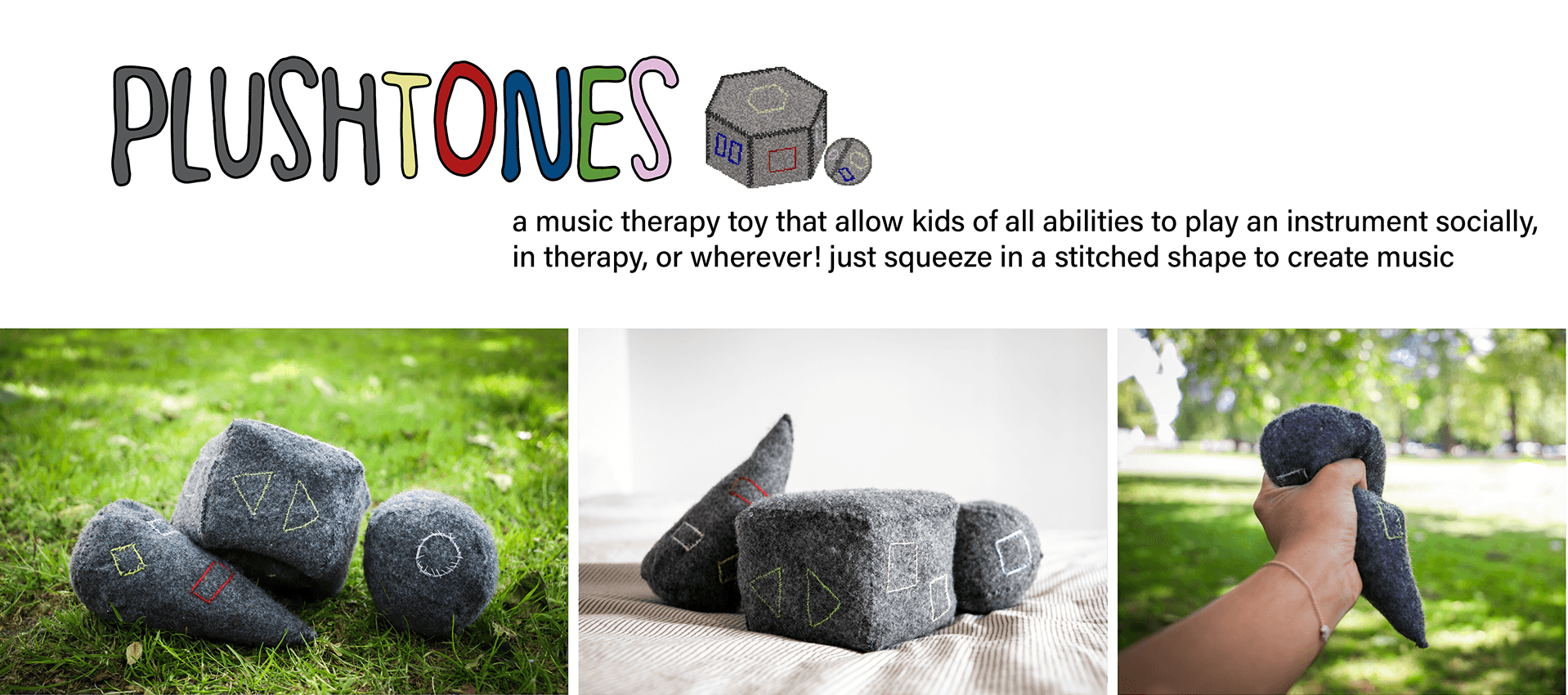
PlushTones is a screen-free, music-based interaction concept using soft "plush instruments" that can be programmed to different sounds. Designed around emotional regulation and social play, PlushTones helps reduce stress through squeezing and music making—bringing evidence-based music therapy benefits into everyday environments for children, especially those with disabilities and limited mobility.
The Problem: Children's Mental Health in Crisis
Rising Prevalence of Anxiety and Depression
Children's mental health has reached crisis levels in the United States:
20.3% of adolescents ages 12-17 have a current diagnosed mental or behavioral health condition (2023)
16.1% have diagnosed anxiety (up 61% from 10% in 2016)
8.4% have diagnosed depression (up 45% from 5.8% in 2016)
Nearly 1 in 3 youth (31%) ages 12-17 had a mental, emotional, developmental, or behavioral problem in 2022-2023
Among all children ages 3-17: 11% have anxiety, 4% have depression
The Treatment Gap
Despite this crisis, access to care remains severely limited:
61% of adolescents with diagnosed conditions had difficulty getting needed treatment in 2023
Only 1 mental health provider for every 350 people in the US (and as low as 1 per 850 in some states)
40% of adolescents with major depressive episodes did not receive mental health care
54% of youth ages 12-17 have difficulty getting needed mental health care
Children with Disabilities Face Even Greater Challenges
Children with learning disabilities are disproportionately affected:
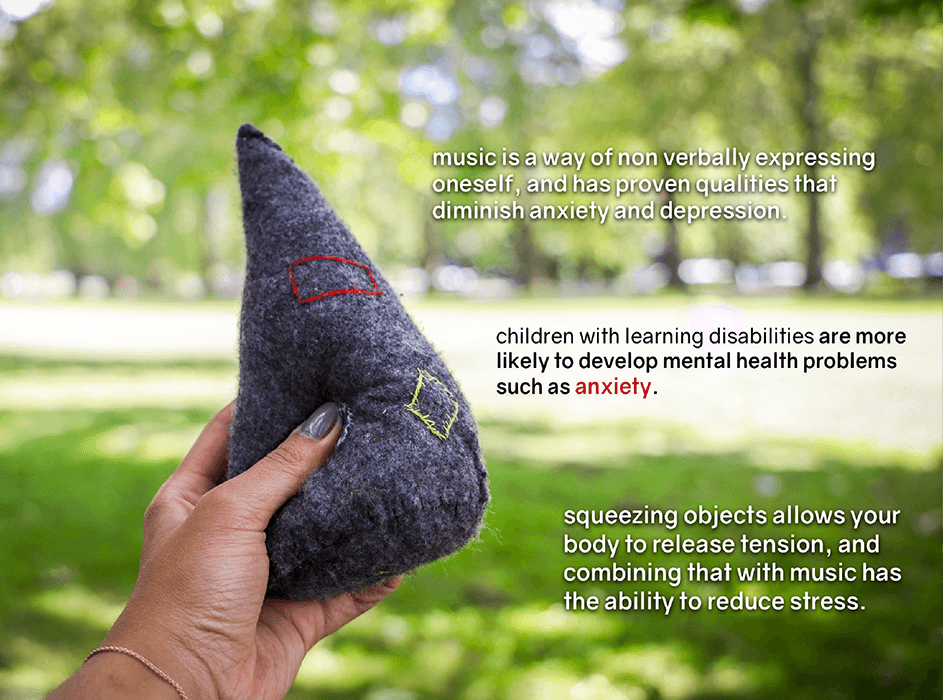
Children with learning disabilities are more likely to develop mental health problems such as anxiety
Access to specialized music therapists is extremely limited—few children with profound and multiple learning disabilities have regular access
Traditional musical instruments are often inaccessible for children with physical limitations
Music is a way of non-verbally expressing oneself, and has proven qualities that diminish anxiety and depression
Why Music Therapy Matters
The Science of Music and Mental Health
Music therapy is a clinical, evidence-based treatment with profound benefits:
Proven Effectiveness:
12 out of 14 studies (86%) showed statistically significant benefits from music-based interventions for children
Music therapy significantly alleviates anxiety and depression in children with special needs
Reduces pain perception and distress during medical procedures
Enhances emotional regulation, social skills, and cognitive development
Music activates reward pathways and releases neurochemicals that bolster mental resilience
How It Works:
Music is processed in a different part of the brain than speech and language—children can more easily absorb information through music
Squeezing objects allows your body to release tension, and combining that with music has the ability to reduce stress
Provides favorable alternative to pain, discomfort, and anxiety often associated with disabilities
Multisensory engagement (auditory, tactile, motor) strengthens brain connectivity and promotes neuroplasticity
Special Benefits for Children with Disabilities
Music therapy is particularly valuable for children with limited mobility and developmental challenges:
Technology-mediated and multisensory musical activities provide new opportunities for self-expression for children whose physical limitations prevent using traditional instruments
Music interventions improve motor function, particularly gait and lower limb mobility
Reduces heart rate (by 8 beats/min), respiratory rate (by 0.8 breaths/min), and increases oxygen saturation
Accessible and cost-effective—can be implemented in inpatient, outpatient, or home settings
Recognized as a related service in special education under IDEA (Individuals with Disabilities Education Act)
The Solution: PlushTones
Core Concept
PlushTones transforms music therapy from a specialized clinical service into an accessible, everyday tool that children can use independently or socially—no therapist required.
Key Features
Programmable Plush Instruments:
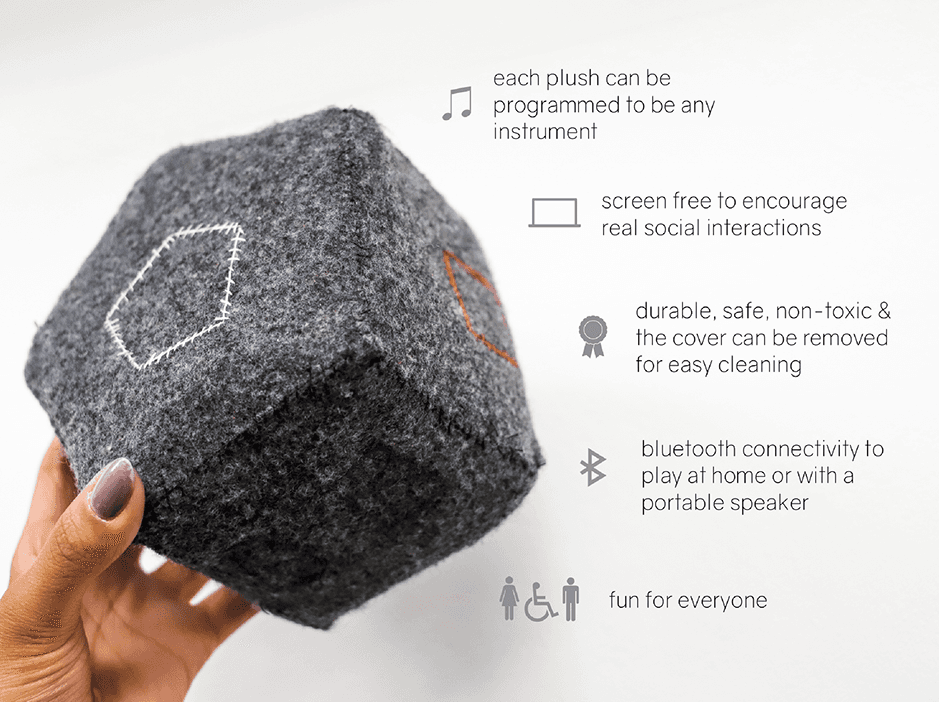
Each plush can be programmed to be any instrument
Soft, squeezable form factor designed for stress relief through tactile engagement
No screens—encourages real social interactions and reduces digital exposure
Accessible Design:
Durable, safe, non-toxic materials
Washable covers for easy cleaning
No fine motor skills required—accessible to children with limited mobility
Bluetooth connectivity to play at home or with a portable speaker
Dual-Purpose Functionality:
Emotional Regulation: Squeezing provides physical stress release while making music offers creative expression
Social Play: Fun for everyone—can be used in group settings to develop social skills and peer interactions
What Was Shipped
Physical form concepts for multiple plush instrument designs
Interaction model for programming and playing
Visual identity and branding
Product principles: durability, safety, washability, Bluetooth functionality
Designed specifically with accessibility and mental wellbeing use cases in mind
Prototype Development:
Built working prototype using Bare Conductive PCB board
Coded custom integration with Ableton Live
Created open Ableton session allowing each sound to be mapped to different patches on each side of the plush
Constructed physical form with foam and wired the touch-sensitive pads to the PCB
Enabled multiple interaction modes: squeezing, tapping, and pressure-sensitive touch
Impact Potential
Democratizing Music Therapy
PlushTones addresses the critical gap between need and access:
Accessibility:
No specialized therapist required—brings music therapy benefits into homes, schools, and community centers
Affordable consumer product vs. expensive clinical sessions
Works for children across ability levels—from neurotypical to profound disabilities
Scalability:
Each plush can serve multiple children (families, classrooms, therapy centers)
Screen-free design promotes multi-generational play and parent-child bonding
Portable—therapy benefits travel with the child
Targeting the Treatment Gap
With 61% of children unable to access needed mental health treatment, PlushTones offers:
Daily support for anxiety and depression between (or instead of) clinical visits
Preventive intervention for children showing early signs of distress
Complementary therapy that enhances traditional treatment approaches
Privacy and autonomy—children can self-regulate without stigma
Evidence-Based Design Principles
Why Squeezing + Music Works:
Music therapy studies show that:
Combining tactile engagement (squeezing) with auditory stimulation activates multiple brain regions simultaneously
Physical action (squeezing) provides proprioceptive feedback that helps release tension
Creating music (not just listening) promotes active engagement and sense of control
Social music-making improves peer interactions and reduces isolation
Screen-Free Philosophy:
Reduces overstimulation common in digital therapy apps
Encourages present-moment awareness and mindfulness
Promotes face-to-face social interactions critical for development
Removes barriers of screen time limits parents impose
Why PlushTones Succeeds Where Gaps Exist
For Neurotypical Children:
Accessible stress relief during homework, before bed, during conflicts
Social play that doesn't require screens or structured activities
Creative outlet for emotional expression
For Children with Disabilities:
Traditional instruments often require fine motor skills many disabled children lack
PlushTones requires only gross motor movement (squeezing)
Multisensory experience (touch, sound, sight) engages multiple pathways
Can be adapted to individual needs (volume, instrument choice, group vs. solo)
For Families:
Bridges therapy clinic and home—continuity of care
No specialized knowledge required to support child's use
Strengthens parent-child bonding through shared music-making
Washable, durable design withstands daily use
For Schools and Therapy Centers:
Cost-effective alternative to hiring music therapists
Supports existing special education programs (recognized under IDEA)
Can be integrated into group activities or individual sensory breaks
Evidence-based intervention schools can point to when justifying resources
Conclusion: Therapy That Travels
In a landscape where:
1 in 5 children struggle with anxiety or depression
61% can't access needed mental health treatment
Children with disabilities face compounded barriers
Music therapy shows 86% effectiveness but requires scarce specialists
...PlushTones offers a tangible, accessible solution.
By combining the proven benefits of music therapy with the universal appeal of plush toys, PlushTones transforms clinical intervention into playful, everyday support. The squeezable design addresses both the physiological need for stress release and the emotional need for creative expression—all without screens, specialists, or stigma.
PlushTones doesn't replace therapy. It extends it. Into homes, classrooms, and anywhere children need support. Because when mental health treatment is difficult to access for 61% of children, the best intervention is the one that's already in their hands.
Product Concept: PlushTones
Key Innovation: Programmable plush instruments combining stress-relief squeezing with music therapy
Target Audience: Children of all abilities, with special focus on accessibility and mental wellbeing
Design Principles: Screen-free, durable, safe, washable, Bluetooth-enabled
Status: Physical form concepts, interaction model, and visual identity completed