
Kijana | Healthcare, UX Design, Qualitative Resarch

Executive Summary
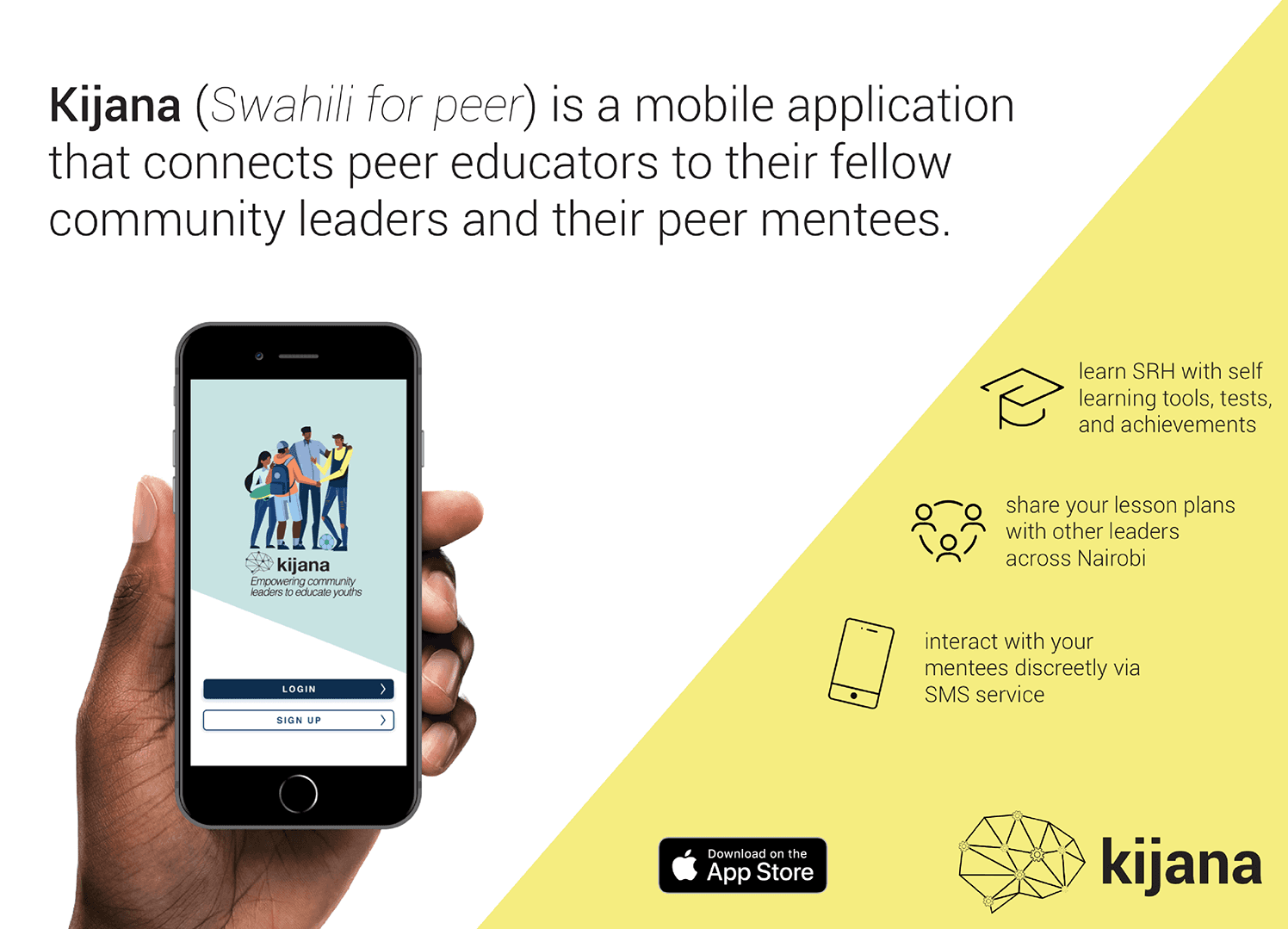
Kijana (Swahili for "peer") is a mobile and SMS-enabled service that supports peer educators in helping young men access sexual and reproductive health (SRH) information in Nairobi, Kenya. The platform uses privacy-first engagement to reduce stigma barriers that prevent young men from seeking essential information.
The Problem
Kenya's Sexual Health Crisis
Despite progress, Kenya faces a persistent youth sexual health crisis:
240,000 teenage pregnancies among girls aged 10-19 in 2024
15% national teenage pregnancy rate for women aged 15-19 (2022)
73 births per 1,000 women aged 15-19, compared to global rate of 44.1 per 1,000
Nairobi (Kenya's capital and most populous county) recorded 11,795 teenage pregnancies in early 2020—the highest absolute number of any county despite having one of the lowest rates (8.4%)
The Education Gap
Sexual health education in Kenya systematically fails young men:
Limited Comprehensive Sexuality Education (CSE)
CSE is taught as "Life Skills"—an unexaminable subject that teachers deprioritize
Only 2% of students learn all comprehensive curriculum topics
Sexual education is largely absent from secondary school curricula
Teacher Challenges
45% of teachers feel unprepared or uncomfortable answering sexuality questions
Only 36% of teachers trained on all comprehensive curriculum topics
60% of teachers emphasize that sex is dangerous and immoral
Gender-Specific Barriers
Cultural norms dictate only fathers/men can provide SRH guidance to boys
Young men lack discreet channels to ask questions without judgment
Half of all new HIV infections occur in people ages 15-24, affecting both genders
Research Question
"How might we improve access to sexual reproductive health information and services for young men in Nairobi, Kenya?"
Research Methods
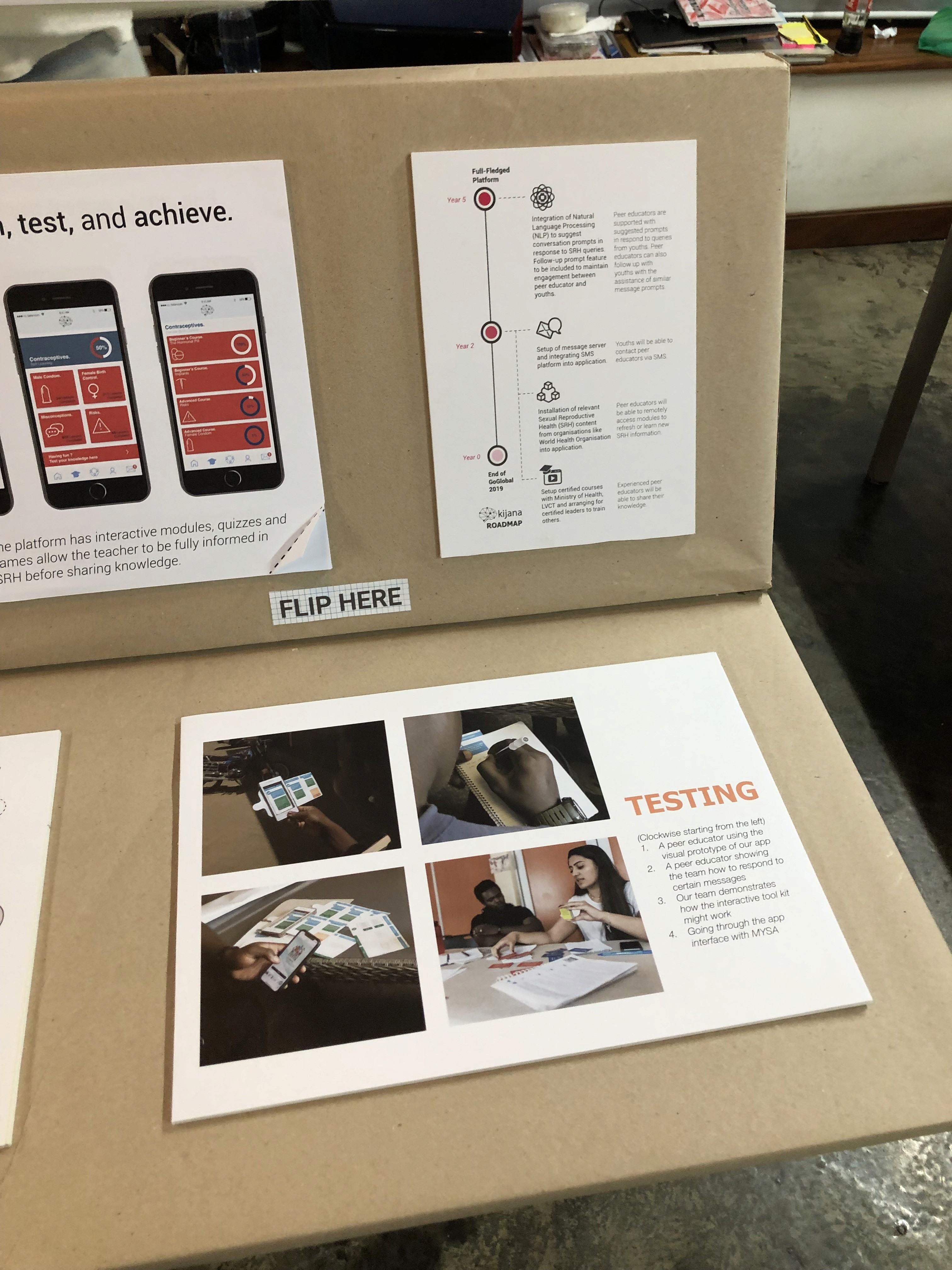
Interviews with young men of Nairobi on information needs and barriers
Interviews with young women of Nairobi on sexual health stigmas
Community stakeholder engagement with peer educators

Key Insights
Stigma is the primary barrier - Traditional channels (parents, teachers, clinics) are perceived as judgmental
Peers are already trusted - Young men turn to peers but these interactions lack accuracy
Privacy enables engagement - Discretion is essential for young men to seek information
Interactive learning works - Achievement-based learning increases retention and engagement
The Solution
Core Principle
Privacy-First Engagement to Reduce Stigma Barriers
For Peer Educators:
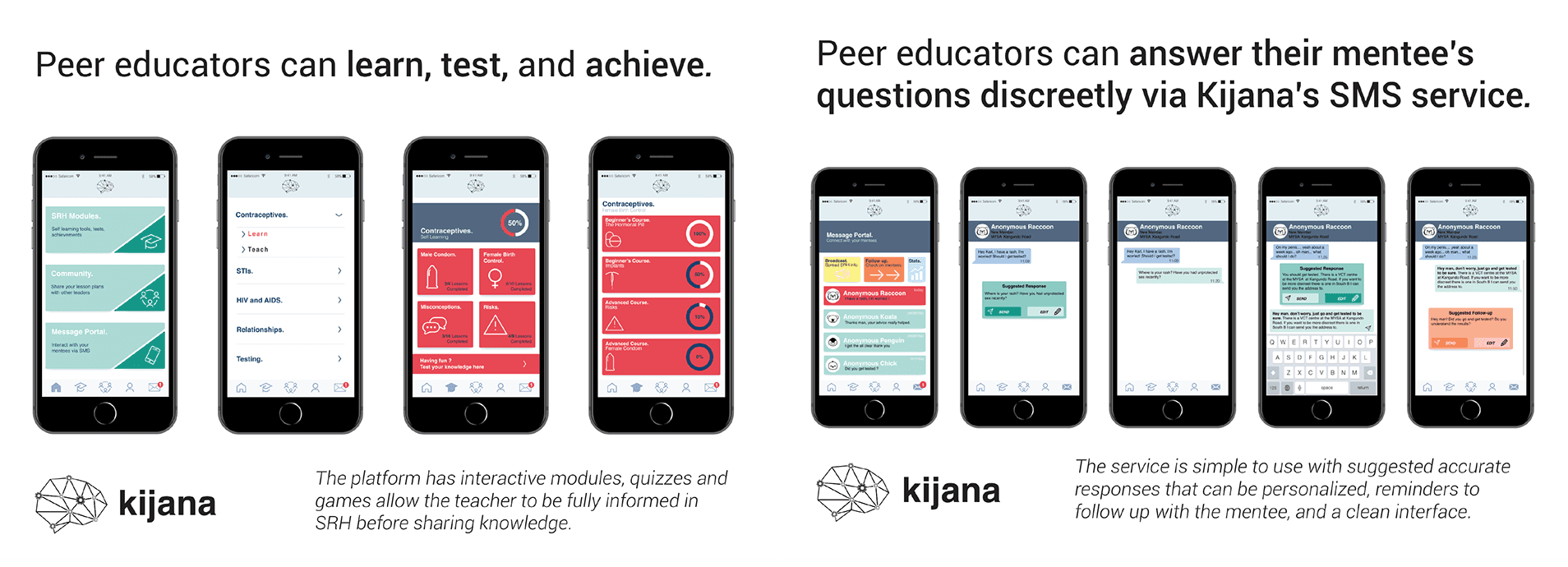
Self-learning tools with interactive modules, tests, and achievements
Knowledge validation through quizzes and achievement-based progression
Collaboration platform to share lesson plans with other leaders across Nairobi
For Young Men:
Discreet SMS service for private communication with peer educators
Accessible technology works on basic phones, no smartphone required
Responsive support with timely answers and referrals when needed
What Was Shipped
Service concept and end-to-end user journey
App structure and UI optimized for low-bandwidth
SMS interaction flow for discreet communication
Learning system with quizzes and achievement-based progression
Knowledge sharing infrastructure for peer educators
Impact Potential
Addressing the Education Gap
Provides comprehensive SRH education outside limited school curriculum
Scales quality education through trained peer educators
Reduces information inequality via accessible SMS technology
Breaking the Stigma Cycle
Young men can ask questions they'd never raise publicly
Peer educators gain legitimacy and support to serve communities
Normalizes SRH discussions within trusted relationships
Why It Works
Peer education significantly impacts SRH knowledge and attitudes
Privacy design removes the major barrier to information seeking
Mobile technology reaches 80% of Kenya's population; SMS is universal
Complements existing systems rather than replacing them
Challenges & Future Considerations
Sustainability: Partnership opportunities with NGOs and government health programs
Quality Control: Regular recertification and integration with professional health workers
Scale: SMS foundation provides rural accessibility potential
Behavioral Change: Longitudinal tracking and integration with contraceptive access programs

Conclusion
In a context where schools provide minimal education, teachers feel uncomfortable, and young men face stigma when seeking information, Kijana offers a complementary pathway: empowering trusted peers with tools, knowledge, and a platform to serve their communities.
By designing for privacy first, Kijana creates a safe space for young men to learn, question, and make informed decisions about their sexual health—addressing the gap that contributes to Kenya's 240,000 annual teenage pregnancies.
Design Team: Imperial College London / Royal College of Art
Target: Young men aged 15-24, Nairobi, Kenya
Innovation: Privacy-first peer education combining mobile app and SMS technology
References
Kenya Demographic and Health Survey (KDHS) 2022 - Kenya National Bureau of Statistics
National Syndemic Diseases Control Council (NSDCC) 2024 Report
Guttmacher Institute - "From Paper to Practice: Sexuality Education Policies and Their Implementation in Kenya" (2017)
UNFPA Kenya - Individual Consultancy to Assess Drivers of Teenage Pregnancies in High Burden Counties (2024)
Forum for African Women Educationalists (FAWE) - Situational Analysis Report on Teen Pregnancies in Kenya (2024)
BMC Public Health - "Challenges and opportunities for improving access to adolescent and youth sexual and reproductive health services and information in the coastal counties of Kenya" (2024)
UNESCO - Comprehensive sexuality education in sub-Saharan Africa: adaptation and implementation challenges